Lebanon · in-country processing
Your clients’ faces never leave Lebanon.
Assentify runs its own cloud and GPU servers inside the country. Onboarding, document reading, face matching, liveness, screening and signing all happen here.
- Cloud and GPU
- In country
- Lebanese ID
- Every
- And SIC 18-26
- ISF Leb 24
- Subscribers live
- 30+
The obligation
Lebanese law is specific about where the data lives.
Banque du Liban rewrote the rules on electronic banking in January 2026. Three articles decide which country the data sits in and who may touch it.
Local Data Hosting
Basic Decision 7548, Article 7
Banks and financial institutions conducting electronic banking and financial operations must store in Lebanon all data and information pertaining to customers and executed operations. Intermediate Decision 13791 of 9 January 2026 replaced the article.
Who may touch the data
Basic Decision 7548, Article 8
The institution is the data controller. It may share personal data only with Banque du Liban, the Banking Control Commission, the SIC and the judicial and legal authorities, and it stays responsible toward the client.
The same rule for payment providers
Basic Decision 13790, Article 27
Electronic Payment Services Providers carry the identical Local Data Hosting obligation. Article 26 adds facial recognition linked to the photo on the user’s identification document.
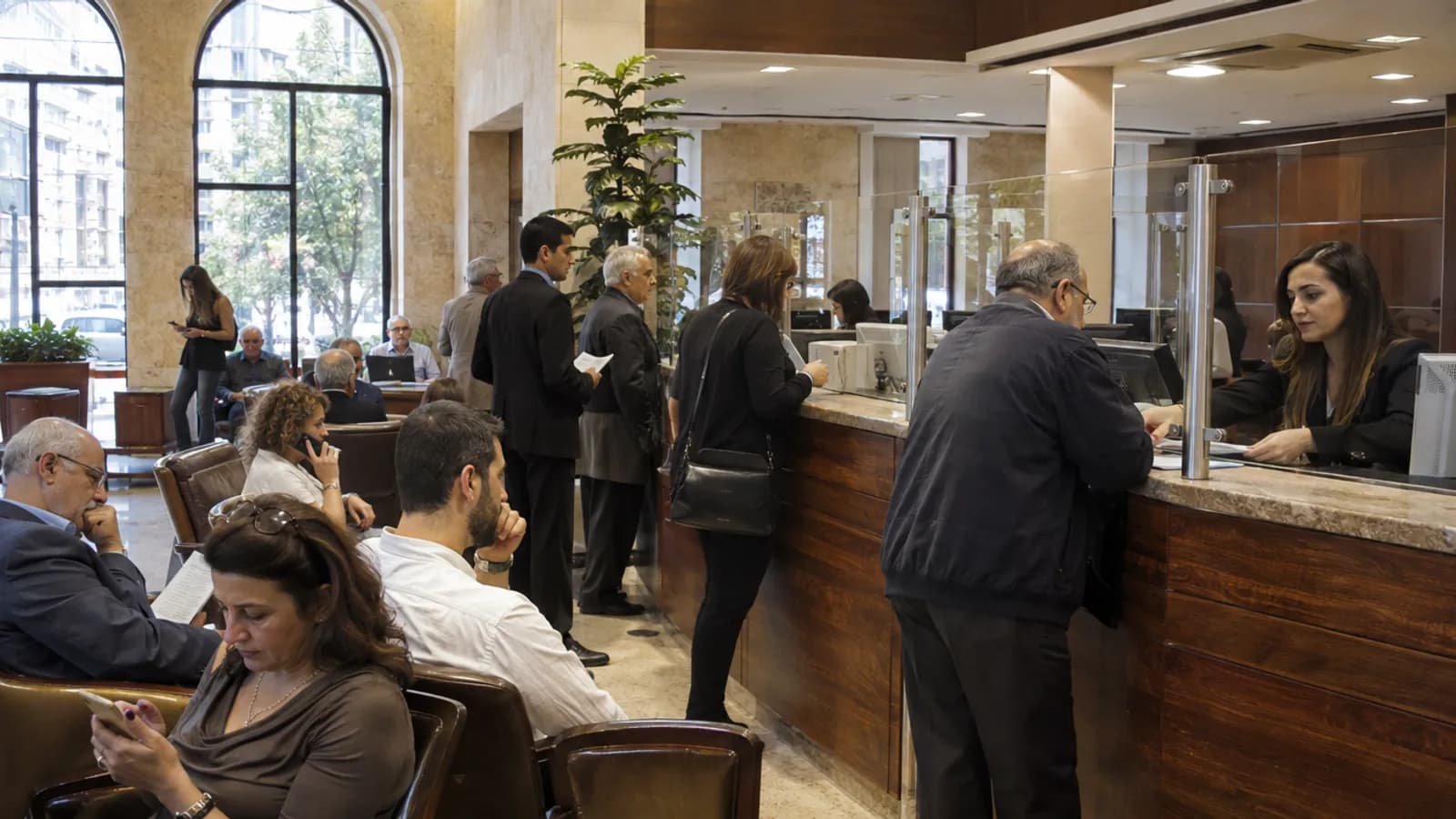
The architecture
In country, all the way down.
Storage in Lebanon only holds if the compute that reads the document, matches the face and scores the risk sits in the same place.
01 · The tenant
The tenant sits on Lebanese infrastructure
Assentify runs a local Assentify Cloud in Lebanon on a dedicated single-tenant footprint with a Lebanese sovereign IT outsourcing provider. Data Persistence is a first-class per-tenant setting with two values, On Cloud or On Premise, and the on-premise option runs through a proxy address you control.
02 · The compute
The models run on GPU servers in the same country
Document OCR, face matching, liveness and language processing run on in-country GPU inference nodes. Nothing is queued to a foreign region to be read and nothing is retained by a third-party model provider.
03 · The screening
The screening happens beside it
Global sanctions, enforcement and PEP coverage arrives through plugins to LexisNexis and Refinitiv, so procurement assesses suppliers it already knows. The local Lebanese lists, ISF Leb 24 and SIC 18-26, sit in the same engine, and custom lists you define sit beside them.
04 · The evidence
The evidence stays where the regulator expects it
Captured documents, selfies, match percentages, lists searched, decisions, users and timestamps land on one interaction record and in the Audit Hub. Backups are held in country, and the Banking Secrecy Law of 1956 binds the hosting arrangement by contract.
Pick a step
Where it runs
The client’s phone or browser
Web link, WhatsApp or your app
- This step
Assentify Cloud, in Lebanon
Own cloud and GPU servers, in country
Data persistence
On cloud or on premise, per tenant
Document read. A vision model reads the document on Assentify’s GPU servers inside Lebanon.
Capital Outsourcing runs the Security Operation Center and Network Operation Center for Assentify Cloud, 24/7, under a service level agreement.
Residency datasheet
- Processing locality
- In country, Lebanon
- Compute
- Assentify Cloud with local GPU
- Data persistence
- On cloud or on premise, per tenant
- Monitoring
- SOC and NOC 24/7, Capital Outsourcing
- Local lists
- ISF Leb 24 · SIC 18-26
- Global lists
- LexisNexis and Refinitiv plugins
- SIC letters
- Processed locally through SICILIA
- BDL circular surface
- RF1 BDL Circular, in Settings
- Script handling
- Arabic and Latin transliteration
- Signature
- Electronic, digital, and OTP as e-signature
- Audit
- Audit Hub by user, decision and date
No Lebanese instrument requires model inference to happen in the country. Running the whole pipeline here is a design choice: there is no border crossing to explain to a supervisor. Capital Outsourcing runs the Security Operation Center and Network Operation Center for Assentify Cloud, 24/7, under a service level agreement.
Lebanese documents
Every Lebanese identity document, not only the ones with a machine readable zone.
Global vendors read passports well because passports are standardised. Lebanon is not a passport market. It is a market of civil IDs, civil extracts, residence permits and refugee documents, in Arabic.
Extraction is templated per document type, in Arabic and Latin script, and the document type is set on the capture step. A retail flow can accept the Civil ID, the passport and the residence permit while a corporate flow accepts something else. Outside Lebanon the same engine reads global identity documents by market and parses passports to ICAO 9303.
Supported in country
- Lebanese Civil ID
- Arabic and Latin fields, front and back
- Lebanese passport
- MRZ parsed to ICAO 9303
- Lebanese driving licence
- Templated OCR by document type
- Civil extract (ikhraj qaid)
- Register extract as an accepted document
- Residence permit
- Named in Basic Circular 83, Article 3(4)
- Army card
- Regional template, in country
- Palestinian refugee ID
- Regional template, in country
- Syrian refugee ID
- Regional template, in country
The Lebanon-only surfaces
Two things no international vendor ships.
SICILIA
SIC letters, processed inside Lebanon.
The Special Investigation Commission is Lebanon’s financial intelligence unit, established at Banque du Liban under Law 44 of 2015. It works by correspondence: it circulates the names of suspects to banks and financial institutions, and it issues freezing and secrecy-lifting decisions.
Each of those letters has to be read, searched against the whole client book and answered under confidentiality, and most of it still arrives on paper. SICILIA turns the scanned letter into structured, searchable records without the pages leaving the country, and puts a human in front of every page before anything is exported.
RF1 BDL Circular
A BDL circular surface built into Settings.
RF1 BDL Circular is a Lebanon-specific, access-restricted module that sits in the platform’s Settings alongside User Management, AML Management and the RTRA engine. Lebanese cash-transaction reporting is a structured data obligation with a deadline attached.
The underlying programme is Basic Decision 13769 of 14 November 2025, addressed to non-banking financial institutions, finance companies, exchange institutions and payment providers. Form RF1-A is completed once per client for cash transactions at or above USD 1,000 and refreshed by risk category within five years. Form RF1-B is completed per transaction at or above USD 1,000, excluding cash withdrawals. Both are retained at least five years, and the institution reports daily to BDL within two business days. Basic Decision 13798 of 21 January 2026 then adds the Cash Transaction Slip for daily cash deposits of USD 10,000 or more, cross-checked against the KYC Form.
Screening
Anyone can sell you OFAC. Almost nobody carries ISF Leb 24 and SIC 18-26.
Global coverage arrives through plugins to LexisNexis and Refinitiv. The local Lebanese lists cannot be bought off a shelf, and a Lebanese institution is still expected to screen against them.
The matching engine has an AI agent write candidate variations of a name, then searches those variations, the transliterated names and the phonetic codes together, Double Metaphone, Soundex and Skeleton, which is characters only. Candidates are compared to the index by edit distance. Traditional algorithms and AI-driven matching are blended at a split each client sets, with 40 and 60 recommended. Profiles apply independently to Interactions, Client Clear and the Workspace, and Arabic to Latin transliteration is a setting on the search.
On the ground
A market we stand in, not one we ship to.
Beirut has heard this team present its work in person.
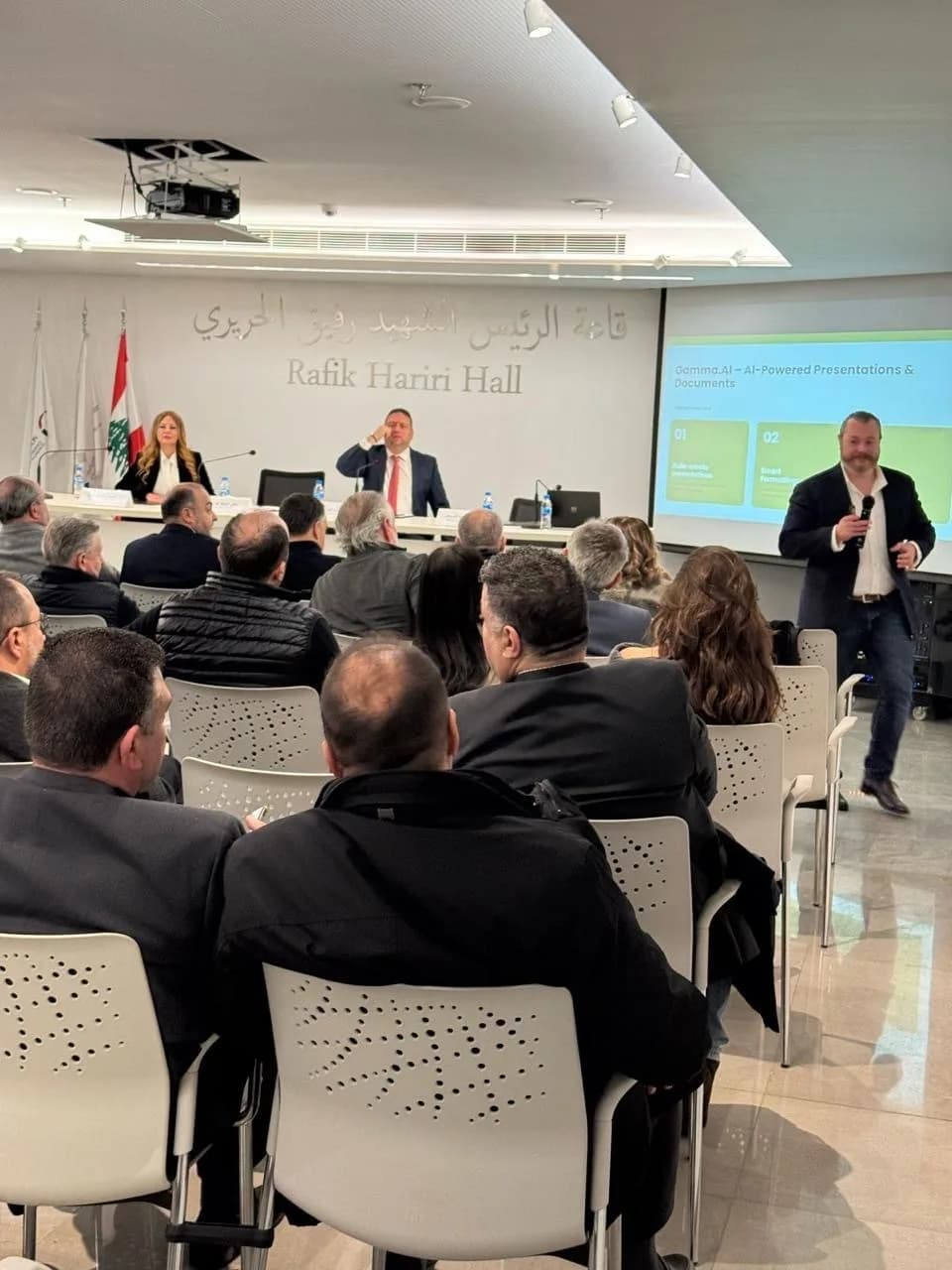


At Rafik Hariri Hall, the team presented AI tooling to a full professional audience. The same team has run a digital transformation session for a national telecom operator, and has keynoted the Lebanese Association of Actuaries annual conference.
Onboarding in this market happens on a phone. Campaigns publish it as a printed QR code: a scan, then a flow.
The market
Banks, wallets, insurers and financial institutions in Lebanon run flows on Assentify.
A market of a few hundred named decision-makers: banks, insurers, a handful of wallets, several hundred exchange offices and gold traders, two telecom operators and the regulators.
45
banks in the market, roughly
15
insurers, around
2
telecom operators, both national scale
30+
subscribers live on Assentify
Lebanese banks, digital wallets, financial institutions and insurers run on Assentify, including Alig, Fidelity, Libano-Suisse and MedGulf. The platform also runs a national-scale central bank eKYC programme and national telecom deployments.
For a mid-sized Lebanese institution, that scale means an architecture already sized for a national programme and an in-country deployment already running. The support team is in the same time zone, speaks Arabic, English and French, and works from the same circulars as your compliance department.
Signature
An electronic signature is legal here. The proof decides it.
Law 81 of 2018 gives electronic writings and signatures the same legal effect as paper, provided the signatory is identifiable and the record is safely stored and intact.
In Lebanon the strength of an electronic signature is the strength of the evidence behind it: identity proofing at the moment of signing, a tamper-evident audit trail, integrity sealing on the document, and the record retained in country. BDL also recognises the one-time password as the client’s electronic signature in banking.
Assentify signing produces advanced, qualified-grade digital signatures. Signed PDFs carry Assentify’s Adobe Approved Trust List (AATL) certificate, so Adobe Acrobat and Reader show them as trusted. Signing keys are held in a hardware security module, and Assentify runs a local certificate authority in country.
Questions
Lebanon, answered.
Yes, for banks and financial institutions conducting electronic banking and financial operations. Article 7 of Banque du Liban Basic Decision 7548, as replaced by Intermediate Decision 13791 of 9 January 2026, requires them to store in Lebanon all data and information pertaining to customers and executed operations. Basic Decision 13790, Article 27 imposes the identical Local Data Hosting rule on Electronic Payment Services Providers. The obligation comes from banking regulation; Lebanon’s privacy law, Law 81 of 2018, requires disclosure of a cross-border transfer but does not prohibit it.
Inside Lebanon, on Assentify’s local cloud and GPU servers. Document OCR, face matching, liveness and language processing all run on in-country inference nodes, so the document image and the selfie are never sent abroad to be read. No Lebanese instrument requires inference to happen in country; Assentify runs it here because Article 7 requires storage here and Article 8 restricts who may touch the data.
Assentify supports every Lebanese identity document, including the Lebanese Civil ID, the Lebanese passport, the driving licence, the civil extract known as the ikhraj qaid, the residence permit, the army card, the Palestinian refugee ID and the Syrian refugee ID. Extraction is templated per document type and handles Arabic and Latin script.
No, and no technology vendor should say otherwise, because the approval attaches to the institution rather than to the vendor. Article 2 of Basic Decision 7548 requires the bank, financial institution or payment provider to obtain prior BDL approval for the E-KYC and E-Money services, and to notify BDL in writing 90 days before starting a covered operation. What Assentify does is make that file passable: identity proofing and enrolment, authentication and lifecycle management built to FATF Guidance on Digital ID, technical documentation, security controls, and a deployment that keeps the data inside Lebanon.
Through SICILIA, Assentify’s local processing agent for Special Investigation Commission letters. Lebanese banks and financial institutions receive a continuous stream of SIC correspondence, from name circulations to freezing instructions, and each letter has to be searched against the whole client book. SICILIA digitises the letters inside Lebanon and puts a person in front of every extracted page before anything is exported.
Lebanese banks, digital wallets, financial institutions and insurers run on Assentify, including Alig, Fidelity, Libano-Suisse and MedGulf. Assentify also runs a national-scale central bank eKYC programme and national telecom deployments. Across all subscribers the platform runs hundreds of thousands of transactions daily, with more than 30 subscribers live.
Start
Run a real Lebanese onboarding, on Lebanese infrastructure.
We provision a tenant on your own subdomain, load the lists you screen against, and let your team capture a Civil ID, match a face and clear a match end to end. One month, no card.