Liveness detection
Passive. Active.
Configurable.
Most vendors ship one liveness mode and ask you to accept its trade-off. Assentify ships three, plus liveness on the document itself, and lets the flow decide which bar applies where.
- Certified passive liveness
- iBeta
- Liveness modes
- Three
- Set on each step
- Per step
Four modes
One capability, four settings, four risk appetites.
Pick a mode to see what it asks of the client and where it is set.
Passive liveness
iBeta certified- Asked of the client
- Nothing beyond the capture
- Set on
- Facial Image Acquisition
- Setting
- Perform Liveness Detection

Active liveness
Challenge based- Asked of the client
- A prompt on the screen
- Set on
- Facial Image Acquisition
- Belongs on
- High-risk steps
Configurable liveness
The differentiator- Asked of the client
- Whatever the step requires
- Set on
- Each step, in Flow Builder
- Published
- With the flow
Document liveness
On the card- Asked of the client
- The physical card
- Set on
- Identification Document Capture
- Setting
- Document Liveness
At national scale, a passive check that completes on the first attempt is worth more than a marginally stronger check that loses applicants at the camera. A corporate account with a seven-figure first deposit deserves every challenge you can throw at it.
What the client sees
A few seconds, and a prompt they cannot rehearse.
In passive mode the face sits inside the guide, the capture completes, and the analysis runs on frames the client never thinks about. A check nobody notices is a check nobody abandons.
In active mode the prompt is not known until it appears. A recorded video cannot answer it, and a printed photograph cannot answer any prompt at all.
Attacks the face check is built against
- Printed photograph held to the cameraDetected
- Video replayed from a phone or monitorDetected
- Paper and cutout masksDetected
- Silicone and latex masksDetected
- Three-dimensional attacksDetected
- Makeup and disguise attacksDetected
The Assentify video-based face liveness work has been published with IEEE. The engineering team will walk your fraud team through the method under NDA.
Liveness on the document
The ID or passport has to be alive too.
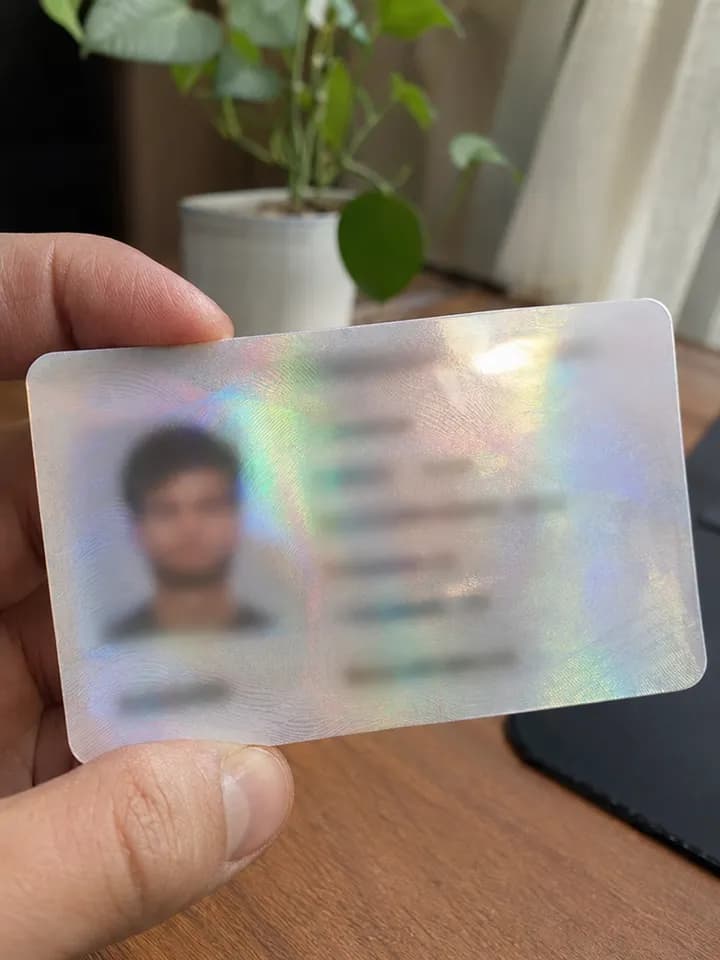
Document liveness checks that the ID or passport is the real document, captured live in front of the camera, not a copy of one. In the front end, during capture, it reads what only a physical document has: the laminate, the holograms, and how both react to light as the conditions change.
Paper, high quality copies, colour copies and vinyl prints do not respond the way a genuine document does, so they are stopped at the camera. Deep learning models in the backend then judge the captured card again: 99.2% accuracy on screen replays, and 96.4% on colour photocopies, cropped and high end image replicas.
- Laminate
- Holograms
- Reaction to light
- Passports
- ID cards, front and back
ISO/IEC 30107-3
What the standard measures, and what a letter means.
Presentation attack detection has a defined methodology. Here is the mechanism, so you can question any vendor with it.
The two figures that matter
APCER
The security number
Attack presentation classification error rate. How often an attack is wrongly accepted as a genuine person. At Level 1 the requirement is zero.
BPCER
The completion number
Bona fide presentation classification error rate. How often a real person is wrongly rejected. The one your product owner cares about, and where the public tables publish only the limit rather than the achieved value.
An independent laboratory tests against a defined set of presentation attack instruments, in defined volumes, over a defined period, and issues a confirmation letter tied to a named product and specific versions.
Level 1
APCER 0%BPCER at most 15%- Printed photographs
- Video replay on screens
- Paper masks
- Cutout masks
Attack instruments capped at low cost. The attacks any fraudster can mount from a phone and a printer.
Level 2
APCER at most 1%BPCER at most 15%- Silicone, latex and resin masks
- 3D-printed masks
- 3D animation
- Realistic dolls
Higher-cost attack instruments, longer test windows, and the level a serious buyer asks about by name.
Certification
iBeta certified passive face liveness, with the letter on request.
The certification covers passive liveness on the face, not document liveness on the card. The confirmation letter names the level, the laboratory, the date and the exact product version tested, so a CISO can verify it line by line.
What the letter states
Confirmation letter- Face presentation attack detection level
- The level tested
- Testing laboratory
- Named lab and accreditation code
- Confirmation letter date
- The date on the letter itself
- Tested product and version
- The named product and the version tested
- Achieved BPCER
- The achieved value, not the limit
Provided on request under NDA.
Limits of the test
What a presentation attack test does not tell you.
Your fraud team will ask about each of these gaps.
Attacks presented to the lens
Photographs, screen replays and masks held in front of a real camera, at the level tested. This is what an iBeta letter speaks to.
Injection attacks
A virtual camera or a frame injected into the video stream never passes in front of a lens, so a presentation attack test does not measure it. It has its own emerging specification, CEN/TS 18099.
Deepfake puppetry
Standard presentation attack lab testing does not evaluate a synthetic face driven in real time by an attacker. It is the attack vector that changed fastest between 2024 and 2026, so ask any vendor, Assentify included, what is shipped today.
Everything after the capture
Presentation attack detection judges the moment of acquisition. It says nothing about whether the document was genuine, whether the name matches a sanctions list, or whether this person already exists in your book.
Other controls cover what the test does not. A depth signal makes a flat surface visible whatever produced it. Document liveness catches a live person presenting a copied card. De-duplication catches the same face arriving twice under different names.
In the flow
Where the setting lives.
Liveness is a property of the step that captures the image, set by the person who owns the flow.
On the face, Facial Image Acquisition runs active liveness and iBeta certified passive liveness. On the document, Identification Document Capture runs advanced liveness checks in the front end while the card is captured, then deep learning models in the backend judge whether the card is real. Both are edited on the canvas in Flow Builder and published with the flow.
When a liveness check wants a human, the record explains the reason, and a reviewer sees the capture, the score and the decision buttons your Backend Block defines.
Liveness settings, by step
Facial Image Acquisition
- Active liveness
- Passive liveness, iBeta certified
- Accuracy: High, Medium or Low
- Store Image Stream for audit
- Allow Image Retake
Identification Document Capture
- Document liveness, front end checks at capture
- Backend deep learning models on the captured card
- Allow Passport and document types
- Store Captured Document
- accuracy on screen replays
- 99.2%
- on colour photocopies, cropped and high end image replicas
- 96.4%
Branch Assisted Mode
At the counter, the same capability.
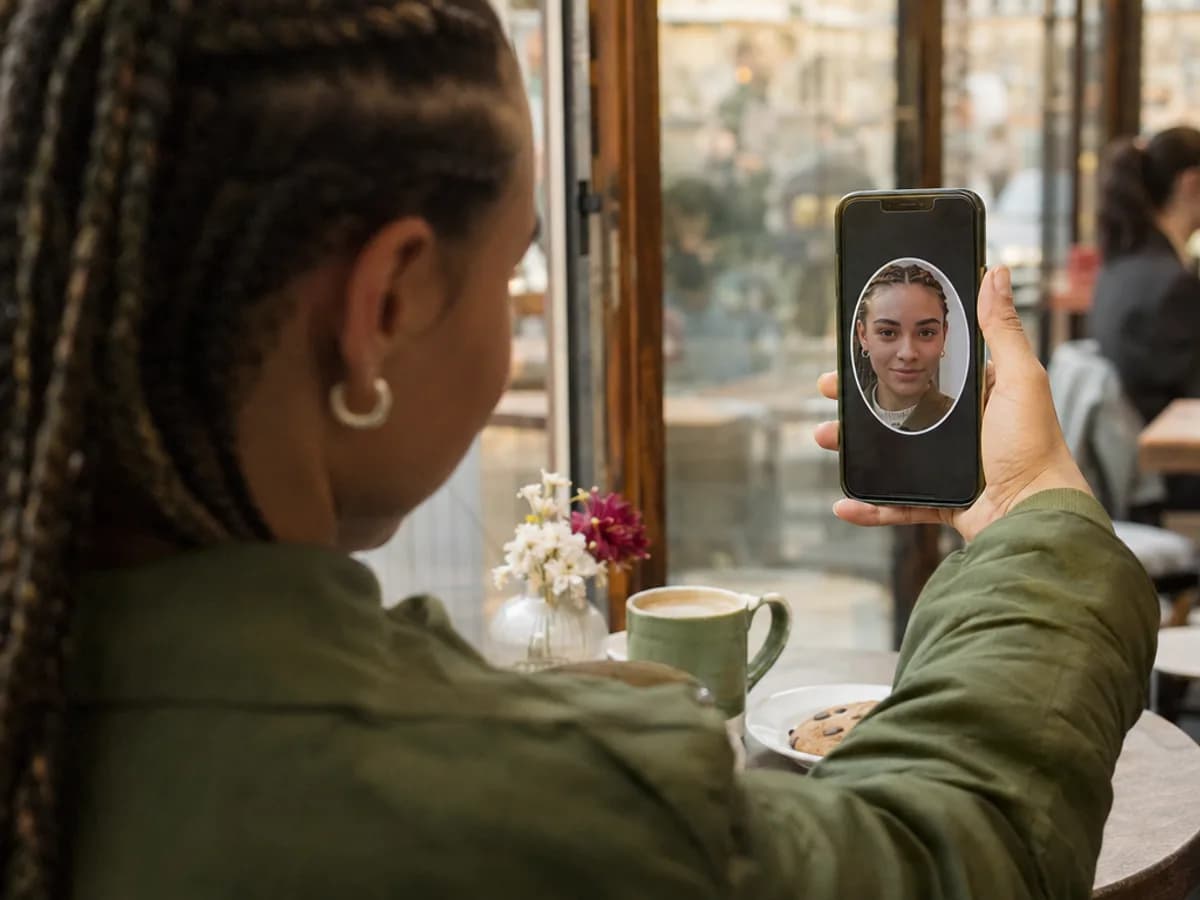
At a counter, liveness runs on the same capture step with the same setting. A member of staff holds the device, and the security bar set on the step does not change.
- The same published flow, with a member of staff holding the device
- Allow Support, set on the flow in Flow Builder
- The same reviewer queue, flags and decision buttons
- One client record and one audit trail across channels

Questions
Liveness, answered
Liveness detection is the test that decides whether the face in front of the camera belongs to a living person present at that moment, rather than a photograph, a video replayed on a screen, a printed mask or a silicone mask. In standards language it is presentation attack detection, defined and evaluated under ISO/IEC 30107-3, which measures how often an attack is wrongly accepted and how often a genuine user is wrongly rejected. It is the single most load-bearing check in remote onboarding, because every other result becomes meaningless if the face was never real.
Passive liveness reaches a decision from the capture alone, with no instruction given to the client, while active liveness asks the client to perform an action that an attacker cannot have pre-recorded. Passive completes faster and drops fewer clients, which matters enormously at national scale where a one percent drop is thousands of people. Active raises the cost of a targeted attack and leaves a reviewable artefact. Assentify ships both, and lets a flow designer choose per step, which is the point of the configurable mode.
Yes, Assentify passive liveness is iBeta certified. The confirmation letter names the presentation attack detection level, the testing laboratory, the letter date and the tested product version, and is provided on request under NDA. An iBeta artefact is tied to a named product and specific versions, so ask which version was tested and whether it is the version being bought.
Presentation attack detection testing evaluates attacks presented to the camera, so it does not cover injection attacks, where a virtual camera or an injected frame bypasses the lens entirely, and it does not cover real-time deepfake puppetry. Those are separate problems with separate methods, and one of them, injection, has its own emerging specification in CEN/TS 18099.
Yes, liveness runs on the document too: the Identification Document Capture step carries a Document Liveness setting that judges whether a physical card is present, with advanced checks in the front end at capture and deep learning models in the backend, measured at 99.2% accuracy on screen replays and 96.4% on colour photocopies, cropped and high end image replicas. Document liveness closes the attack that most face-only systems leave open, where a real live person holds up a picture of somebody else document.
Yes, and that is a feature rather than a loophole. Perform Liveness Detection is a toggle on the Facial Image Acquisition step, and Document Liveness is a toggle on the document step, so an institution sets the security bar per flow and per step. A branch-assisted session where an officer watches the client, a re-verification of an already enrolled client, and a first-time remote account opening are genuinely different risks, and forcing one setting on all three costs either security or completion.
Start
Bring your own attacks.
Print the photograph. Replay the video. Hold up the colour copy of the card. Then look at what the record says.