Fraud detection
A photo of a photo has no depth.
An attacker can make a replay look perfect. They cannot make it three-dimensional. Assentify infers depth from the ordinary capture, so the flatness of a screen, a print or a pasted overlay becomes a measurement rather than a judgement call.
- Extra hardware on the device
- None
- Depth read on every capture
- Face and card
- Models voting on face replace
- More than 5
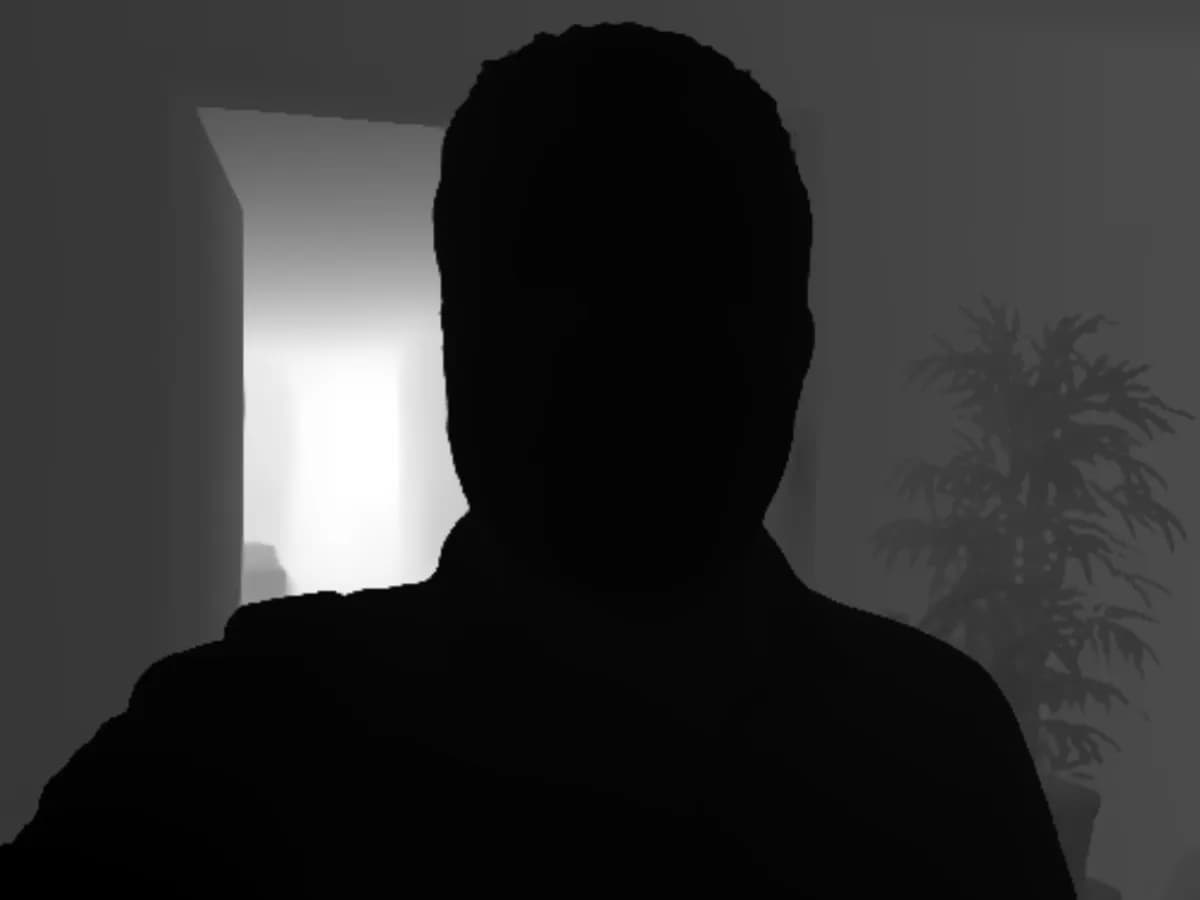
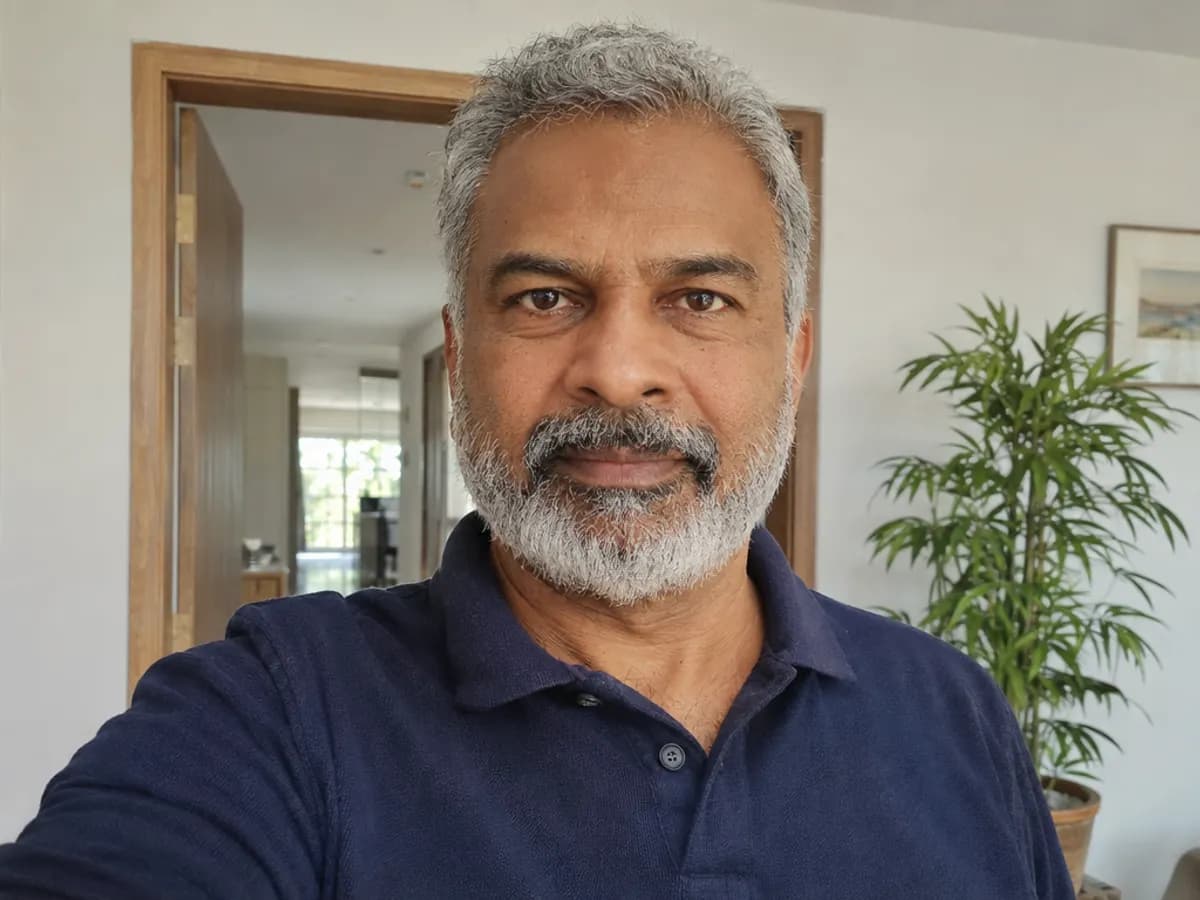
Texture and depth
The same capture, as texture and as depth.
An attacker can copy everything the camera sees. They cannot copy the depth of a real head in a real room, and that is what the model reads.
The physics
Why flatness is the unavoidable problem for an attacker.
Every presentation attack has to put something in front of a lens, and almost everything an attacker can put there cheaply and at scale is flat.
A real face is a surface in three dimensions
The tip of a nose is closer to the lens than the cheeks, which are closer than the ears and the wall behind. A depth model reading a genuine capture finds that structure intact, and it is very hard to fake in front of a camera.
A screen is a plane
A video replayed on a phone or a monitor puts every pixel of the face at the same distance from the lens. The texture and lighting can be perfect; the depth field is still flat. The attack beats texture analysis and fails against geometry.
A print is a plane that can bend
A printed photograph, a paper mask or a colour copy is also a plane, sometimes curved to fake depth. A bent sheet has one continuous gradient; a face has local structure around the nose, the eye sockets and the jaw.
An overlay sits above the card
A sticker, a printed strip or a photograph pasted onto a genuine card sits on a slightly different plane from the card. In colour it can be near perfect. In depth it is a step change with straight edges, which the tampering models look for.
Silicone masks and three-dimensional prints carry real geometry, so Assentify pairs depth with certified liveness. Those attacks cost hundreds of dollars each and take skill to build. Depth removes the cheap end of the market, where nearly all the volume is.
How it works
Depth inferred from one image.
A depth sensor measures distance with hardware. A monocular depth model infers it from a single ordinary image, using everything a human eye uses: perspective, occlusion, shading, relative size and the learned structure of real scenes.
Assentify applies a monocular depth estimation model, following the Depth Anything line of work, to the frames the capture step already produces. The client sees no extra prompt and no extra step, and the platform holds a structural description of the scene alongside the visual one.
On the face capture, it separates a person from a rendering of a person. On the document capture, it separates a card from a picture of a card, and a clean card from one carrying an overlay.
Depth analysis, in brief
- Model class
- Monocular depth estimation
- Reference approach
- Depth Anything
- Input
- The ordinary capture, single camera
- Output
- A relative depth field over the frame
- Hardware needed
- None beyond the camera already in use
- Applied to
- Face capture and document capture
- Runs on
- GPU-backed inference inside your deployment
Depth
You cannot photograph your way out of geometry.
Better screens, better printers and better lighting all make an attack look more convincing. None of them make it deeper. That is why depth belongs in the stack next to texture analysis and certified liveness: it attacks the one property of a spoof that the attacker cannot improve without changing the physical object itself.
Defence in depth
Seven controls, one capture.
No single check should be load-bearing. An attacker who beats one has to beat the next, on the same frames, in the same two seconds, while a video of the attempt is being recorded.
Depth on the face
Does the capture have the geometry of a human head, or the geometry of a rectangle? This is what defeats screen replay, printed photographs and flat paper masks before any texture analysis is needed.
Depth on the document
Is the card a single continuous surface, or does something sit on top of it? This is what makes face replace and data replace visible, because both attacks are physically raised above the card.
Liveness, certified
iBeta certified passive liveness plus active and configurable modes, evaluated against defined presentation attack instruments under ISO/IEC 30107-3.
Card liveness
Advanced liveness checks in the front end at capture, then deep learning models in the backend judge whether a physical card is in front of the camera: 99.2% accuracy on screen replays, 96.4% on colour photocopies, cropped and high end image replicas.
Face matching
A Match Percentage between the live face and the face extracted from the document, at a threshold your risk team chose.
De-duplication
Biometric uniqueness across the whole client base, so a face that succeeded once cannot quietly become a second client.
Face replace, by model vote
More than five deep learning models check the portrait at the same time, and they vote, so the verdict on a replaced face does not rest on any single model. Alongside them, data manipulation checks and validation of the printed fields catch a card whose details were changed.
What depth analysis does not cover
Depth analysis does not address injection attacks, where a manipulated stream never passes in front of a camera at all. Those need different controls.
What the record keeps
When a control asks for a human, the reviewer gets the captured images, the live audit video of the extraction and matching, the device name, the user agent and the reason.
Questions
Fraud detection, answered
A screen is flat, so every point on a replayed face is the same physical distance from the camera, while a genuine face has measurable depth structure with the nose closer to the lens than the cheeks, ears and background. Assentify applies monocular depth estimation to the ordinary capture and reads that difference directly. The attack can be visually perfect and still fail, because geometry is the part the attacker did not control.
Monocular depth estimation is a model that infers relative distance for every pixel from a single ordinary camera image, without a depth sensor, a second lens or structured light. It is the reason Assentify can run a depth check on any phone or laptop camera a client already owns. The approach follows the Depth Anything line of work, which produces stable relative depth fields on unconstrained real-world images rather than only on studio captures.
No, no special hardware is required: that is the whole point of using monocular depth estimation, so the check works on the commodity cameras your clients already have. Hardware depth sensors are excellent when present, but they exist on a minority of devices in most markets, and requiring them would exclude exactly the clients a national-scale deployment needs to reach. Depth is inferred from the frames the flow already captures.
Ordinary liveness detection mostly reads appearance, including texture, colour, screen reflections, moire patterns and micro-movement, while depth analysis reads structure. That difference matters because an attacker optimises appearance: better screens, better prints, better lighting all improve a spoof visually without changing the fact that the object is flat. Assentify runs both, so an attack has to be simultaneously convincing to look at and physically shaped like a human head.
Yes, and it is one of the strongest signals for overlay tampering. When an attacker lays a photograph over the portrait on a genuine card, or places a sticker over a printed name, the added material sits slightly above the card surface, producing a step change with unnaturally straight edges in the depth field. Assentify uses depth models alongside convolutional and recurrent models for exactly this, which is why face replace and data replace are named explicitly on the interaction record.
Depth inference runs on GPU-backed infrastructure inside the deployment you choose. In Lebanon, that means Assentify Cloud with in-country GPU servers, so the whole vision pipeline including depth, liveness, document AI and face matching executes inside the country. Data Persistence is set per tenant to on cloud or on premise.
Start
Replay a video at it and see.
Use the best screen you own, in the best light you can arrange. Then read the record.