Lebanon · identity verification
Identity verification in Lebanon, in country and on the face.
Four things have to be true before an account is opened. The document is real. The document says who it says. The person is alive and present. The person is who the document shows. Each one is proved inside Lebanon.
- Passive liveness
- iBeta
- Liveness modes
- Three
- Lebanese ID
- Every
- Matching and scoring
- In country
In the platform
Measured per flow. Recorded per client.
First-try capture, matches and drop-off ship on the dashboard by default, per flow. A reviewer opens each case in the Application Processing Command Center and sees one interaction record.
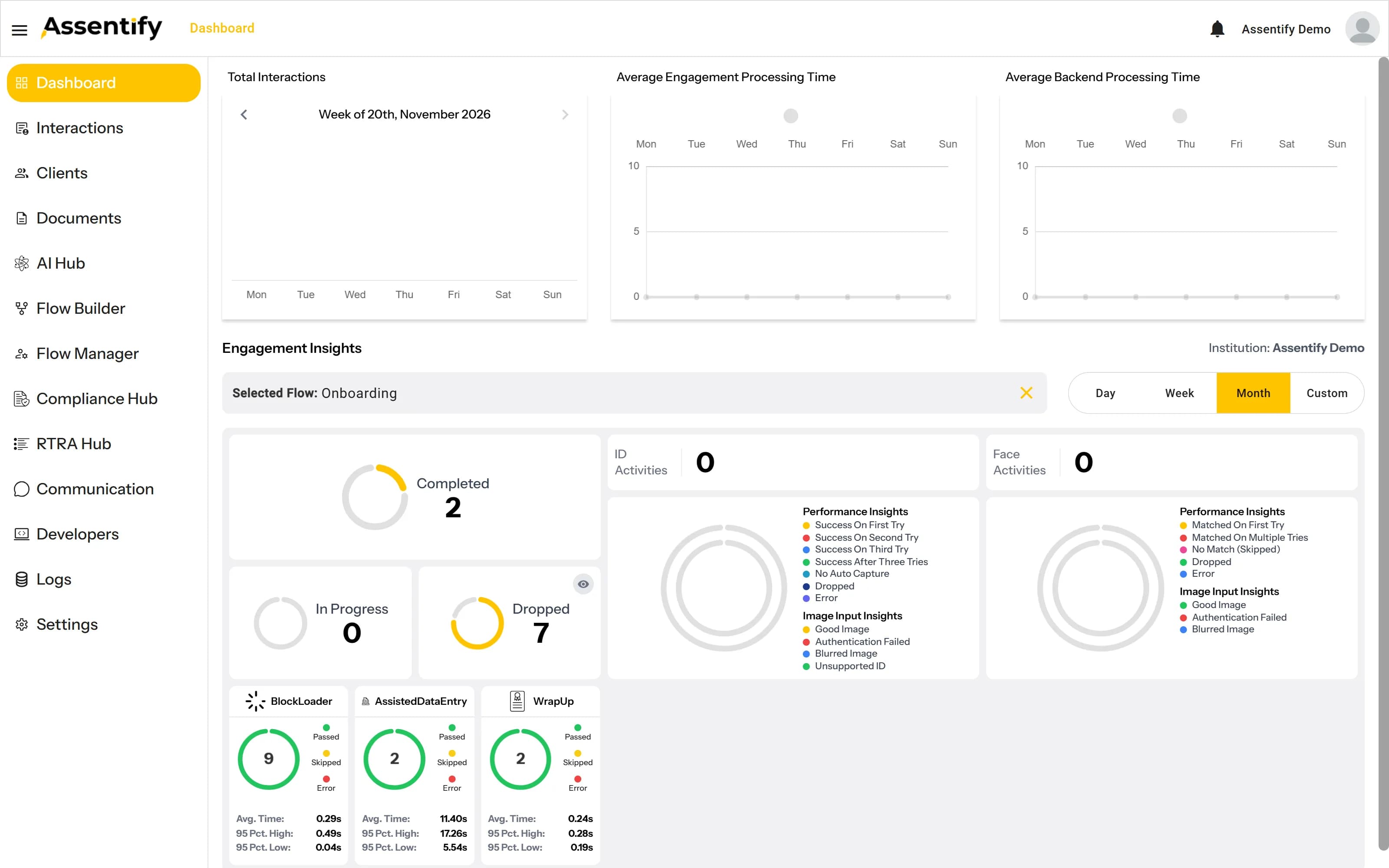
One interaction record
- Captured selfie
- Beside the reference image
- Match Percentage
- Live face vs document face
- Document image
- Front and back, as captured
- Device name
- And full user agent
- Time started / ended
- Per step, to the second
- Row legend
- KYC · AML · Modified
- Lists searched
- Inline Compliance Hub
- Decision buttons
- From your Backend Block
What has to be proved
Four claims, and evidence for each one
A fraud pattern usually attacks exactly one of the four claims. Proving each one separately keeps the review queue readable.
01 · The document
The document is real
Document liveness confirms a physical card is in front of the camera rather than a screen or a print. Tampering detection catches a face or a data field laid over a genuine card. Wrong template detection catches a client presenting a document that is not the one the step expects. Security-feature detection and print-artefact analysis run on the image itself, through vision models rather than template matching alone.
02 · The data
The document says who it says
Extraction is templated per country and per document type. The machine readable zone of a passport is parsed to ICAO 9303. A Lebanese Civil ID is read by template, in Arabic and in Latin script, front and back. Every extracted field is presented to a reviewer beside the source image, and a manual change to any value raises a Modified flag on the record.
03 · The liveness
The person is alive and present
Face liveness is presentation attack detection: is there a living human in front of the lens, or a photograph, a replayed video, a printed mask. Assentify runs passive liveness certified by iBeta, plus active liveness, plus a configurable mode so an institution can raise or lower friction by flow.
04 · The match
The person is who the document shows
Face matching compares the live capture against the face extracted from the identity document and returns a Match Percentage on the interaction record. A live video audit of the match is retained, so a reviewer can replay what happened rather than trust a score. A low score routes the case to manual verification instead of silently passing or silently failing.
Documents
The document checks, one by one
Each check answers one question about the document, and each can send the case to a reviewer.
| Check | What it answers |
|---|---|
| AI card liveness | Is a physical document in front of the camera, not a screen or a print |
| Tampering detection | Face replace and data replace laid on top of a genuine card |
| Wrong template detection | The document presented is not the document type the step expects |
| Security-feature detection | Authenticity signals read from the document image |
| MRZ parsing | Passports and machine readable identity cards, to ICAO 9303 |
| Templated OCR | Regional documents including the Lebanese Civil ID and driving licence |
| Arabic and Latin extraction | Both scripts first class, in capture and in screening |
| Live audit video of extraction | A replayable record of the capture, not only a result |
| Mobile capture handoff | A QR jump from a desktop-started flow to the client’s phone camera |
| Blur and quality signals | Good image, authentication failed, blurred image, unsupported ID |
Extraction runs in Arabic and Latin script, the document type is set on the capture step, and passports are parsed to ICAO 9303. Every Lebanese document and what is read from it is on the Lebanese ID verification page.
The claim
iBeta certified passive liveness. Plus active. Plus configurable.
Most vendors ship one liveness mode and ask an institution to accept whatever friction comes with it. Assentify ships three, set per flow, so a corporate route can be strict and a wallet top-up can be quick without maintaining two products or two audit stories.
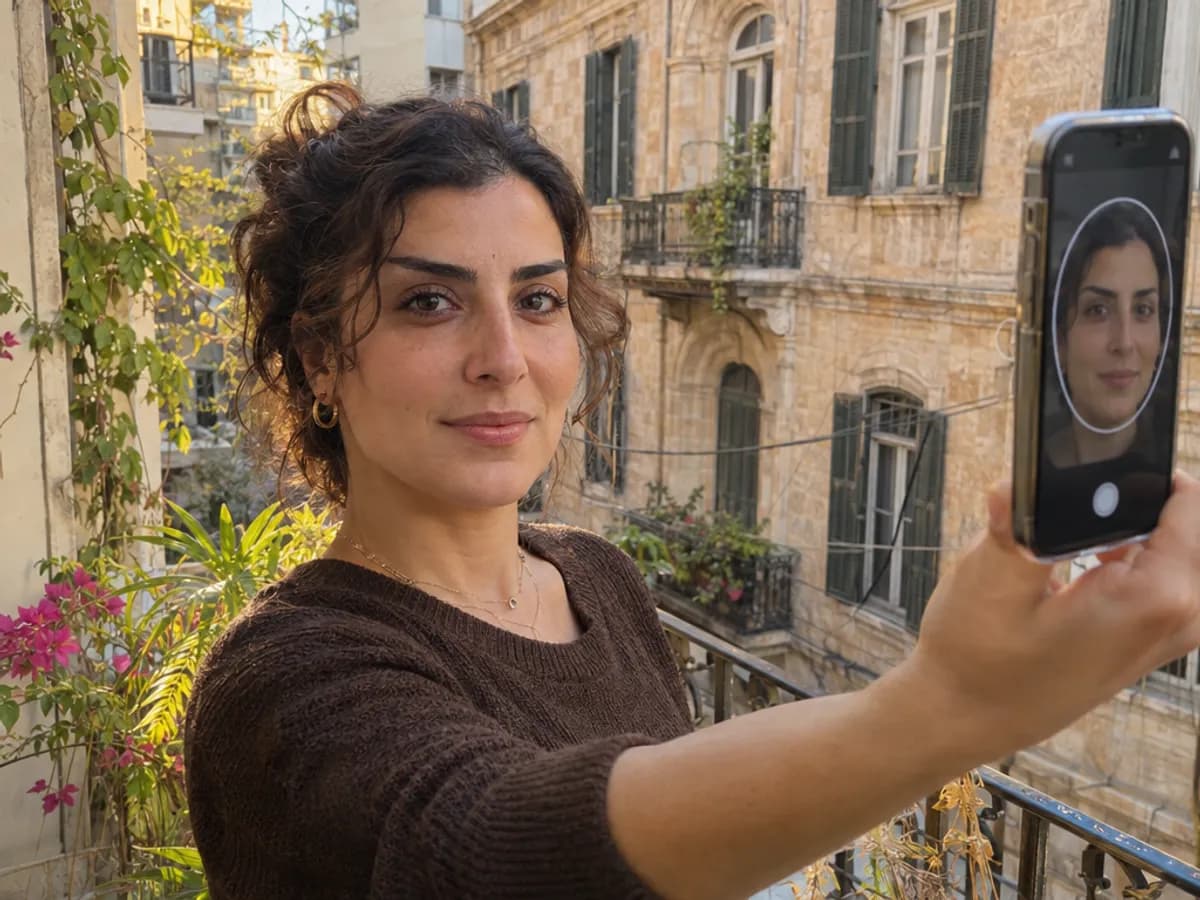
Biometrics
Around the match: capture, depth and encoding
Each of these produces evidence, and each piece of evidence lands on the same interaction record.
Capture
AI-powered face detection with auto-capture and a first-try success metric reported on the dashboard. Image input insights separate a good image from an authentication failure and from a blurred frame, so an onboarding lead can see whether a drop-off is a fraud problem or a camera problem.
Depth and replay defence
Monocular depth estimation is applied to the capture. A genuine face and a genuine card have depth structure. A photograph of a photograph, a screen replay or a printed mask do not. Depth gives a signal that two-dimensional texture analysis alone misses.
Encoding
A biometric face encoding is derived and stored against the client record. The encoding is what makes de-duplication possible later, and it is what turns a one-off verification into a lifecycle the institution can manage.
Where it runs
All of it runs on Assentify GPU servers inside Lebanon, so the selfie and the identity document are read where they are stored. The engine is an internationally recognised biometric engine covering face matching and ABIS-grade capability. Assentify owns the pipeline around it: the capture steps, the audit video, the match evidence, the de-duplication rules and the retention.
De-duplication
One human, one client record
A verification stack that cannot tell you the applicant is already a client has verified an identity and missed a fraud. De-duplication is the control that closes it.
Biometric face encoding uniqueness
Switch on the use of biometric face encoding for uniqueness, and the platform checks a new applicant’s face against the existing client base before a record is created. The same human cannot enrol twice under two names, two documents or two phone numbers.
Field-level uniqueness
Assign any client profile elements that must be unique. A national identity number, a document number, a tax reference, a phone number, or a combination. The rule is set per client profile type, so a Person, a Verified Person and a Verified Business can each carry their own definition of what must not repeat.
Why a Lebanese institution cares
Duplicate identities defeat sanctions screening, because a name that clears under one record is never tested under the other. They inflate client counts, and they are the standard route into mule accounts and multi-loan fraud. The rest of the compliance stack depends on de-duplication.
What the client record carries afterwards
- Person, Verified Person and Verified Business as separate profile types
- KYC documents, captured documents and signed documents per profile
- Run AML screening every X days, three by default
- Alert before KYC expiry, thirty days by default
- Alert before KYC renewal
- Risk Based Approach with configurable levels and thresholds
- RBA Score surfaced in Client Clear beside last cleared and last hit
Why it matters here
The Special Investigation Commission circulates names of suspects to every bank and financial institution operating in Lebanon and expects each one to search its book and answer. A duplicate client record means the search returns one hit where there should have been two, and the answer sent back to the regulator is wrong through no bad faith at all. De-duplication is what makes that answer trustworthy.
How SICILIA handles SIC lettersResidency
Where the verification happens
Article 7 of BDL Basic Decision 7548 requires banks and financial institutions to store client data in Lebanon, and Article 8 restricts who may touch it. Document reading, face matching, liveness scoring and encoding run on Assentify GPU servers inside Lebanon.
Capital Outsourcing runs the Security Operation Center and Network Operation Center for Assentify Cloud, 24/7, under a service level agreement.
Circular 69, article by articlePick a step
Where it runs
The client’s phone or browser
Web link, WhatsApp or your app
- This step
Assentify Cloud, in Lebanon
Own cloud and GPU servers, in country
Data persistence
On cloud or on premise, per tenant
Document read. A vision model reads the document on Assentify’s GPU servers inside Lebanon.
Capital Outsourcing runs the Security Operation Center and Network Operation Center for Assentify Cloud, 24/7, under a service level agreement.
Go deeper
The rest of the Lebanon cluster
Questions
Identity verification in Lebanon, answered.
Identity verification in Lebanon is the process of proving that a person is who their identity document says they are, using the documents Lebanese regulation accepts and evidence a supervisor can review. Basic Circular 83, Article 3(4) names a passport, an identity card, an extract from the Civil Status Register and a residence permit as acceptable identity documents for natural persons. For remote onboarding, Basic Decision 7548, Article 4 First adds that the Digital ID system must meet the requirements for identity proofing and enrolment, and for identity authentication and lifecycle management, as per FATF Guidance on Digital ID.
Yes, Assentify passive liveness is iBeta certified, and the platform also offers active liveness and a configurable mode set per flow. Liveness is presentation attack detection: it decides whether a living person is in front of the camera or whether the capture is a photograph, a replayed video or a printed mask. Assentify runs an internationally recognised biometric engine covering face matching and ABIS-grade capability, operated on Assentify infrastructure rather than called out to a third-party service.
The platform extracts the photograph from the identity document, compares it with the live capture, and writes a Match Percentage to the interaction record beside both images. A live video audit of the match is retained so a reviewer can replay the event rather than trust a single number. When the score is low, or when the document raises an authenticity question, the case is flagged for manual verification and appears in the review queue with a banner, rather than passing quietly.
Yes, through two mechanisms that can be combined. The first is biometric face encoding uniqueness, which checks a new applicant’s face against the existing client base before a record is created. The second is field-level uniqueness, where you assign any client profile elements that must not repeat, such as a document number or a national identity number. Both are set per client profile type, so Person, Verified Person and Verified Business can each carry a different definition of a duplicate.
Inside Lebanon, on Assentify local cloud and GPU servers. Document reading, face matching, liveness scoring and biometric encoding all run on in-country inference nodes, so the selfie and the identity document are read where they are stored. Article 7 of BDL Basic Decision 7548 requires banks and financial institutions conducting electronic banking to store client and operation data in Lebanon, and Article 8 restricts who may touch it.
No, biometric data is not enumerated as a sensitive category in Lebanon’s Law 81 of 2018, which is a genuine gap in the law rather than a licence to be careless. Article 97 requires ministerial licensing for processing that touches state security and for penal offences and judicial proceedings, and biometrics are not listed. Assentify therefore treats biometric templates to the standard the platform is certified against, ISO/IEC 27001:2022, with encryption, need-to-know access and a full audit trail, and processes them inside Lebanon for banking clients under Article 7 of Basic Decision 7548.
Start
Verify yourself, on your own tenant.
We provision your own subdomain with a sandbox allowance. Build a capture and face step, publish it, run your own identity document through it, and read the interaction record that comes out the other side.